Facts about outdoor cabling (twisted pair)
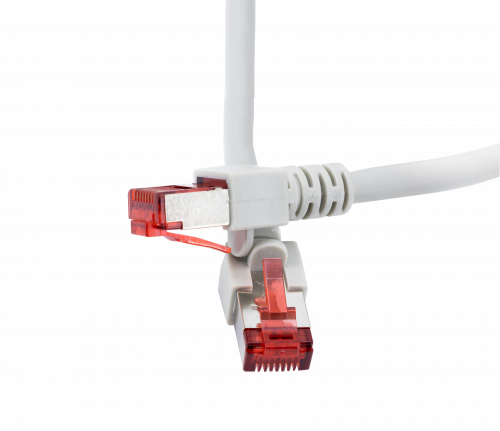
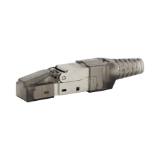
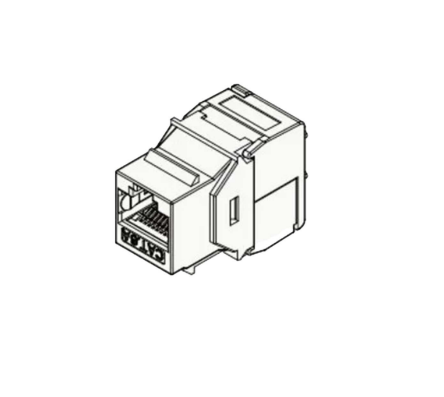
- A larger cable diameter means that not every connector will be compatible. It is recommended to check the cable’s outer diameter and the maximum diameter supported by the connector before installation.
- Cables with a polyethylene (PE) jacket are less flexible, which results in a larger minimum bending radius.
- The PE jacket provides high resistance to varying temperature conditions, with a typical operating range from -40°C up to 70°C.
- Cables with PE insulation offer increased resistance to UV radiation, so the jacket does not become brittle when exposed to sunlight.
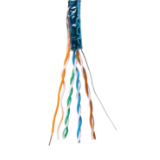
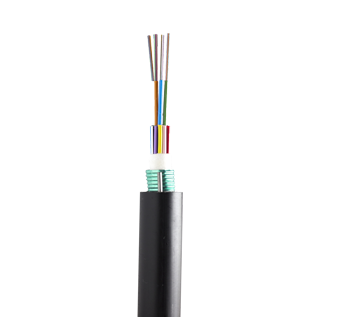
- There are two main types of outdoor twisted-pair cables:
- dry cables — intended for aerial installations,
- gel-filled cables — intended for direct burial installations.
- Outdoor twisted-pair cables are available in categories from Cat 5e to Cat 7 and, depending on the category, in U/UTP (unshielded) as well as F/UTP and S/FTP (shielded) versions.
- Twisted-pair cables with a PE jacket typically do not achieve a fire reaction class higher than CPR Eca.