Significance of the B2ca Fire Performance Class in Structured Cabling
The designation “B2ca” is appearing increasingly often in specifications for cables used in structured cabling systems. For some investors, it is an obvious standard in modern buildings. For others, it represents an additional cost. It is therefore worth clarifying the facts and distinguishing legal requirements from industry habits.
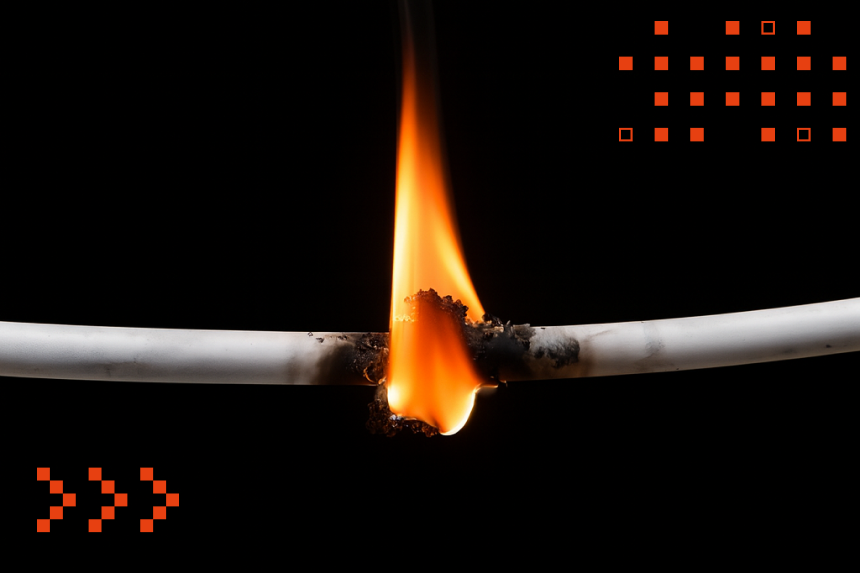
The B2ca fire reaction class for cables installed in buildings is defined by the CPR regulation and the EN 50575 standard. It is part of the classification system for construction products based on their behavior under fire conditions. The discussion therefore concerns whether its use is justified in a specific project.
CPR and Cable Euroclasses
The Construction Products Regulation (CPR) introduced the requirement to classify cables permanently installed in construction works according to their reaction to fire. In practice, this means that any cable used in a building must have a defined Euroclass rating, ranging from Aca to Fca. The higher the class, the more stringent the testing criteria.
B2ca ranks high within this hierarchy. Its requirements include, among other things, limiting fire propagation and heat release during bundled cable testing. These are strict laboratory criteria. However, determining whether they are necessary in a specific facility requires an analysis of the building’s function, fire zones, and cable routing.
How to Interpret the B2ca-s1,d1,a1 Classification
In practice, the full class designation is most commonly encountered, for example B2ca-s1,d1,a1. The “B” classification refers to the primary fire reaction class. The additional markings specify the cable’s performance in three areas:
- s – the amount of smoke emitted,
- d – the presence of flaming droplets or particles during combustion,
- a – the acidity (corrosiveness) of the emitted gases.
The “s” parameter affects visibility and evacuation conditions, “d” relates to the risk of fire spread through flaming droplets, and “a” determines corrosiveness and the potential for damage to technical infrastructure. In facilities with a high density of installations, these parameters can be just as important as the B2ca class itself.
Specific Characteristics of Structured Cabling
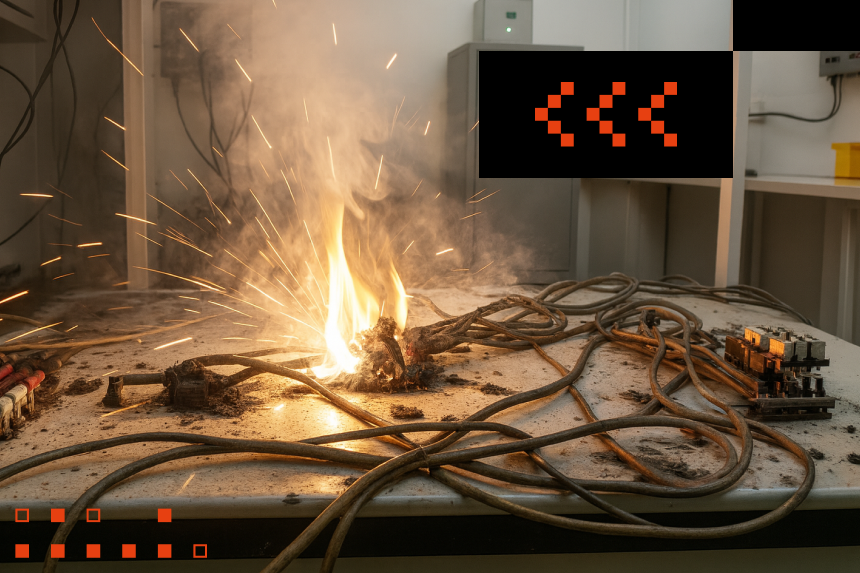
Structured cabling often involves hundreds or thousands of meters of cable within a single building. Vertical risers, corridors, technical spaces, and server rooms create concentrated cable installations that, in the event of a fire, can significantly influence fire dynamics.
In modern buildings, where IT infrastructure density and demand for powering devices via PoE technology continue to increase, the number of bundled cables also grows. This does not automatically mean a higher fire risk, but it does justify a more careful approach to selecting the appropriate fire reaction class.
Where B2ca Is Justified
In evacuation routes, public buildings, facilities with elevated fire safety requirements, or buildings with extensive vertical cable risers, the use of B2ca can be a rational choice. In such cases, predictable installation behavior under fire conditions and reduced smoke emission are critical factors.
In smaller office buildings, outside areas with specific fire safety requirements, the decision to use B2ca should result from project analysis and consultation with a fire protection specialist. Automatically copying specifications from other investments is not always the optimal solution.
The Importance of Documentation
The declared class alone is not enough. A CPR-compliant cable should have a Declaration of Performance (DoP) and CE marking. For higher classes, including B2ca, a more rigorous system of assessment and verification of constancy of performance applies.
From the investor’s and contractor’s perspective, documentation consistency is essential: the design, technical specification, commercial offer, and delivered products must all align. In practice, it is formal inconsistencies rather than the cable class itself that most often create risks during project acceptance.
It is important to clearly distinguish the concept of LSZH from the B2ca classification. LSZH refers to low smoke emission and the absence of halogens in the cable material, whereas B2ca is a formal fire reaction class within the CPR system. A cable may meet LSZH requirements while still having a lower Euroclass rating.
For this reason, project documentation should specify the full CPR classification rather than relying solely on the LSZH designation. Only then are the requirements unambiguous and verifiable at the delivery stage.
An Informed Decision Instead of a Standardized Assumption
The significance of the B2ca fire reaction class in structured cabling lies in reducing risk in critical situations. Objectively, it represents higher performance requirements and more predictable cable behavior under fire conditions. However, the decision to apply it should be tailored to the specific nature of the building and the function of the installation.
The best practice remains the analysis of fire zones, consultation with the designer, and consistent enforcement of CPR documentation requirements. In this approach, B2ca is not a cost in itself, but a design decision based on risk assessment.